
What Theosophy means by the mental plane
The “mental plane” in Theosophical writing is a level of existence in which thought is central. Theosophical writers also connect it with a stage after death, sometimes called Devachan or the “heaven-world”.
Form and formless levels
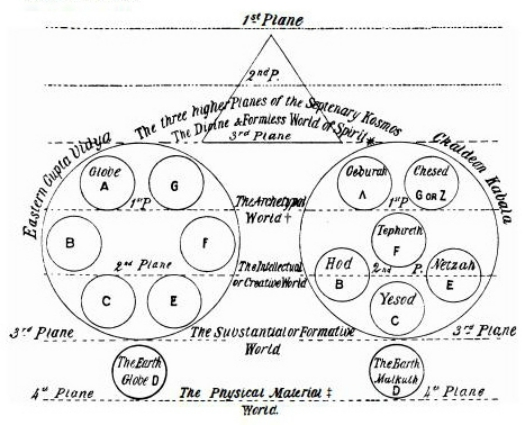
C. W. Leadbeater divides the mental plane into seven parts. He calls the four lower parts rupa, or “form”, where thought is said to take a definite shape. The three higher parts are arupa, or “formless”, and relate to more abstract thought.
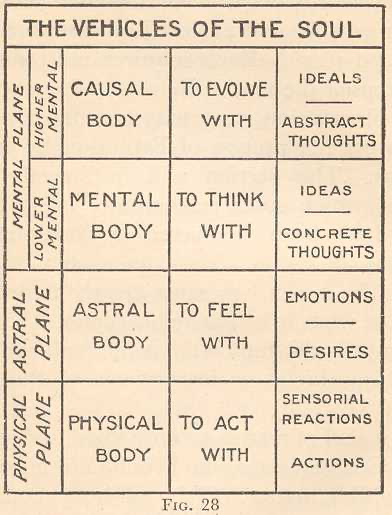
Leadbeater links the lower mental levels with the personality of one life. He links the higher levels with the individuality that Theosophical writers say continues through many lives. This difference helps explain why the literature speaks of both a mental body and a causal body. One is tied to everyday thinking; the other is tied to the deeper self.
A simple example may help. You may picture a friend’s face or plan a journey; these thoughts have clear objects. You may also think about friendship itself or what makes an action fair. Such thinking is less tied to a single image.
The higher mental levels are linked with what Theosophical writers call the causal body, an enduring centre of individuality in their teaching. The causal body is said to carry the meaning of experiences across lives. The idea follows from the preceding articles on evolution and death.
Words such as “lower” and “higher” name levels in Theosophical texts. They should not be used to rank people. Someone who excels at abstract thought is not therefore more compassionate. A person who shows care through action may understand something a theorist misses. No one’s worth depends on a supposed level of consciousness.
Devachan: the proposed heaven-world
After the astral stage described in the preceding articles, Theosophical texts portray a period of mental or “heaven-world” experience. Devachan is a name for this proposed stage after death. It is not a physical destination one could locate or visit. Theosophical texts describe a condition in which the more generous possibilities of a life unfold.
Leadbeater writes that unselfish affection, learning, creativity and service find fuller expression in Devachan. In this view, the deeper self takes in the meaning of these experiences; it does not merely replay them. This connects the mental plane to Theosophical teaching about learning across lives.
He describes this period as shaped by the person’s best hopes and deepest interests. An affection or ideal that had little room to grow during physical life is said to unfold more fully. The emphasis is on learning through what a person loved and valued. It connects the after-death teaching with the question of what we cultivate while living.
There is a moral emphasis here, but it must be handled carefully. The teaching can encourage someone to cultivate love and understanding now. It should not be used to decide whether a person who has died “qualified” for comfort, or to tell a grieving family where that person is. We do not possess that knowledge.
Theosophical descriptions of Devachan also raise a practical question: what do we make room for in our thoughts and relationships while we are alive? That question remains worthwhile wherever a reader stands on the after-death teaching.
Thought, feeling and individuality
The astral and mental planes have different roles in Theosophical writing. The astral plane is linked with desire and emotion; the mental with thought and understanding. In daily life, feeling and thinking affect one another. Strong feeling can narrow thought. A new way of seeing events can change how we feel. Theosophical writers give this familiar link a much wider spiritual meaning.
Thought is not automatically wise simply because it is intellectual. We can reason carefully toward understanding, but we can also rehearse suspicion, justify selfishness or mistake certainty for insight. Theosophical teaching about the mental plane emphasises the quality and direction of thinking, not only the amount of information someone possesses.
Theosophical teaching also separates the personality of one life from an individuality said to endure. Personality includes our habits, preferences and roles. Individuality means a deeper self said to continue through repeated lives. Whether or not you accept that claim, it raises a question: which qualities are worth carrying forward through change?
You may accept, question or set aside these spiritual claims. You can still ask what holds your attention and what habits it strengthens. A repeated judgement can become a habit; repeated curiosity can become one too. The next article looks at thought-forms and the responsibility Theosophical writers link to thought.
The mental plane should not be confused with being detached from feeling. The richest thinking may be informed by affection and a willingness to listen. Theosophical writings connect the heaven-world with love as well as understanding for this reason. They ask what thought becomes when it is oriented toward something beyond self-protection.
You can explore that question in a study group without settling claims about the universe first. People can compare views, say what they do not know and ask how ideas change conduct. A good discussion does not require everyone to agree. It does require us to listen carefully.
The contrast between concrete and abstract thought offers a useful example. We can discuss the facts of one difficult situation, then ask what principle might help in similar situations. Returning to the facts prevents a principle from becoming empty; considering a principle prevents us from treating every new situation as wholly unrelated. Theosophical writers extend this contrast into their wider description of consciousness.
A little more to consider
Read Theosophical descriptions of Devachan alongside their ethical emphasis. What do they suggest about love, learning and the way we use our attention now?
One small next step
At day’s end, recall one thing that held your attention. Did it help you understand, care or act more thoughtfully? Carry that observation into the next article on thought-forms.