
Why repeated thoughts matter
A passing thought does not define a person. Theosophical writing asks us to take repeated thought seriously. What we dwell on can affect how we see others and what we do next. The teaching on “thought-forms” says that thoughts create subtle forms.
What is a thought-form?
In Theosophical teaching, thought is described as activity in a mental “body” that produces both a spreading influence and a more distinct form. Feeling is said to colour and strengthen that form. This is the Theosophical meaning of a thought-form: an effect in subtle matter.
Theosophical writings describe several effects of thinking. A thought may reinforce a habit or affect the thinker’s feelings. It is also said to radiate outward and produce a definite thought-form.
Annie Besant and C. W. Leadbeater describe two effects of a definite thought. One is a spreading vibration; the other is a distinct form said to persist for a time. They also connect its character with feeling and intention.
In their account, a thought directed with care differs from a passing idea. Attention gives it strength, while feeling influences its quality. This is why the writers discuss thought alongside desire and emotion rather than treating the mind as separate from the rest of life. Their teaching asks readers to notice what they return to again and again.
A practical distinction is easier to recognise. A thought can pass, or it can be rehearsed until it becomes a familiar way of interpreting events. If we repeatedly assume that a colleague is hostile, we may begin to notice only signs that confirm it. If we practise asking what we might have missed, our next conversation may take a different direction.
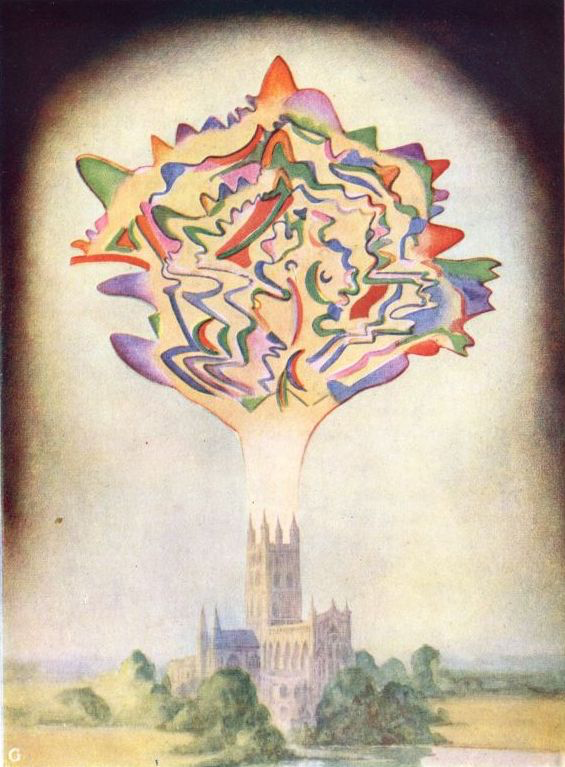
Where thoughts are directed
Theosophical texts group thought-forms by direction: toward another person, centred mainly on the thinker, or left without a particular target. A thought of gratitude toward a friend, a recurring grievance about oneself, and a vague anxious atmosphere illustrate the different directions.
A thought aimed at another person might be generous, resentful or fearful. In ordinary life, the direction matters because it may affect how we speak and act. A suspicion silently rehearsed can show up as distance or accusation; gratitude may become a word or gesture. Theosophical writing also considers how the feeling behind a thought gives it its character.
Think of a moment when you want to help someone but are also irritated with them. The intention may be kind, yet the irritation can shape your words. Pausing to notice both parts of the experience can make your response clearer. Besant and Leadbeater place this link between thought and feeling at the centre of their discussion.
Self-directed thought can also shape a habit. Some self-reflection helps us learn, while endless self-condemnation can make change harder. Theosophical emphasis on responsibility should never be used to demand perfect mental control. A kind and accurate thought about oneself may be more useful than either flattery or relentless criticism.
Besant and Leadbeater ask readers to consider repeated attention. We may keep returning to a grievance or to a wish to help. It matters whether we feed a harmful habit or practise a kinder response. What we say and do matters too.
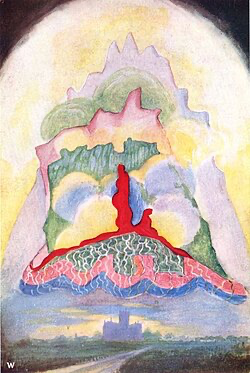
Responsibility without blame
The ethical application is to notice how suspicion, gossip or resentment may be fed, and to leave room for a more truthful and generous response. It is not a demand to suppress every unpleasant thought. Fear, irritation and grief can arise without invitation. Naming them honestly may be wiser than pretending they are absent.
An unwanted thought does not mean a person has harmed someone, caused illness or made a difficult event happen. Intrusive and distressing thoughts are not moral failures. People who struggle with them deserve support rather than a spiritual explanation that increases guilt. The distinction between a passing thought and a chosen, repeated action is important.
Responsibility often begins at the point where a thought could become speech or conduct. Before repeating a rumour, we can ask whether it is true. Before acting on an assumption, we can ask a question. Before sending a sharp message, we can pause long enough to decide what outcome we actually want. Small pauses do not guarantee perfect choices, but they create room for them.
The link between attention, habit and action takes this article sequence toward practice. The Noble Eightfold Path is a Buddhist teaching that Annie Besant and C. W. Leadbeater also wrote about. It considers how understanding, intention, speech and action can work together.
There is another useful distinction between intention and outcome. We may mean well and still say something hurtful; we may feel angry and nevertheless act with restraint. Paying attention to thoughts is not a substitute for listening to feedback or repairing harm. It should make such repair more possible.
The question, then, is less “How do I prevent every negative thought?” and more “How do I relate to what arises?” We can notice, examine, seek help when needed and choose the next action. This approach is gentler and more realistic than treating the mind as a place that must always be pure.
It can help to separate what happened, what we felt and the story we formed about it. A friend did not reply; we felt anxious; we concluded that they were angry. The conclusion may be right or wrong. Recognising it as a thought, rather than a fact, gives us a chance to respond with more curiosity and less automatic fear.
A little more to consider
Besant and Leadbeater connect thought with intention and conduct. How might noticing a repeated thought change what you say or do next?
One small next step
Before repeating a story about someone, ask whether you know it is true and whether telling it would help. This small link between thought, speech and action leads into the final article on the Noble Eightfold Path.