
The visible world and inner experience
What counts as nature? We can describe a tree through its shape, cells and surroundings. We can also ask about the life we experience within ourselves: sensation, feeling, thought and awareness. Theosophical literature speaks of “planes of nature” to explore how these parts of life might relate.
Seven planes of nature
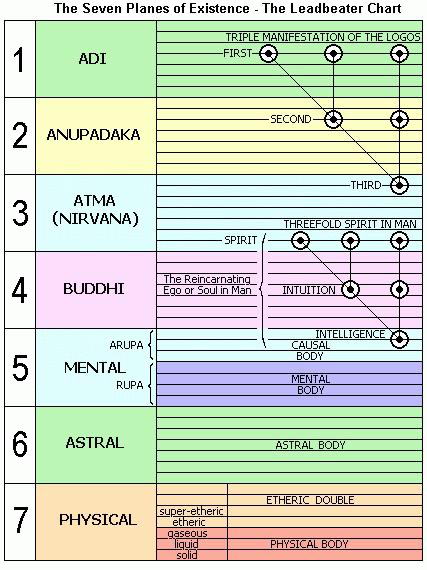
In Theosophical writing, a plane is a proposed level of existence. The seven planes are called physical, astral, mental, intuitional, spiritual, monadic and divine. C. W. Leadbeater describes them as present together, rather than stacked like floors of a building. In this teaching, a person does not travel upward through seven physical places. Life is said to have several aspects at once.
The physical plane includes the world we know through the senses. The astral is linked with desire and emotion; the mental with thinking and imagination. The intuitional, or Buddhic, plane is said to involve a direct sense of unity. The spiritual, or Atmic, plane and the monadic and divine planes name still less familiar states. Theosophical authors explain these upper levels in different ways. You do not need to act as if you have experienced them.
Some Theosophical texts divide each plane into smaller parts. Those details matter in later descriptions, but they can distract a new reader. First ask what each name is meant to distinguish. We can notice the difference between physical sensation, emotion and thought.
Some older Theosophical texts compare the planes to ranges of vibration. This language expresses the idea that different kinds of experience may exist together. They also describe each plane as having finer levels within it. The physical plane, for example, includes the visible forms of matter and what these writers call etheric matter. The later articles look more closely at the astral and mental levels.
Theosophical writers also differ in how they explain a plane. Some speak of kinds of matter, while others focus on states of consciousness. The words can overlap, but they do not answer every question in the same way. Ask which meaning an author has in mind before comparing two descriptions.
There is no need to master every Sanskrit term at once. Start with the three most familiar themes: bodily life, feeling and thought. Then notice what Theosophical literature adds as a claim about each one. That habit makes room for both curiosity and honest doubt.
Theosophy’s layered view of a person
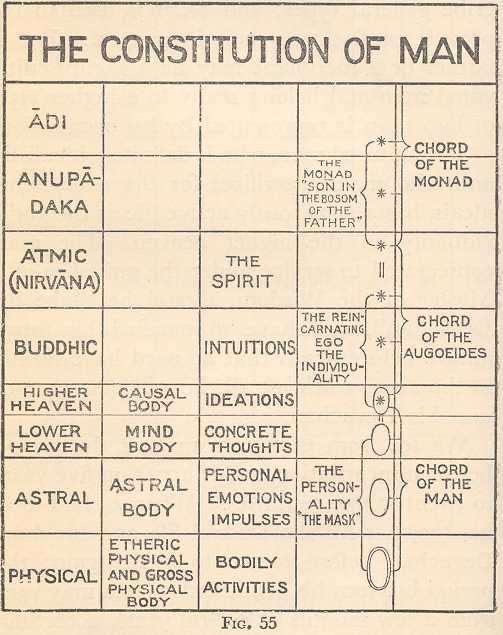
Theosophical writers also describe “bodies” or “vehicles” through which consciousness is said to function. They distinguish the dense physical body from an etheric counterpart within the physical plane. The etheric double is not counted as an eighth plane. Theosophical writers use it to explain how life and vitality might be expressed through the physical body.
An astral body is associated with emotion and desire, and a mental body with thinking. Theosophical writers distinguish everyday, concrete thought from a higher mental level linked with enduring individuality. The term “causal body” names a proposed vehicle of consciousness associated with that higher level. It is said to gather experience into a continuing self across lives, a question taken up in the next articles.
C. W. Leadbeater calls these bodies “vehicles” because he describes consciousness as working through them. In waking life, the physical body is at the centre of our attention. In his account, other vehicles become more important in sleep and after death. This is why the same ideas return in the articles on the astral plane, the mental plane and what may follow death.
These bodies belong to Theosophical descriptions of a person. The terms offer a way to reflect on bodily needs, feelings and ideas. They also help explain how Theosophical writers connect everyday life with spiritual development.
Consider an ordinary disagreement. Your shoulders tense; you feel hurt; you form a story about the other person; then you choose what to say. These events are connected, but they are not identical. Theosophical writers describe body, feeling and thought as parts of a much wider spiritual life.
Why these distinctions matter
The seven planes connect parts of life that can seem separate: bodily needs, emotion, ideas and a sense of purpose. The same terms appear in Theosophical discussions of evolution, death and thought. Knowing what “astral” and “mental” mean here will help with those later subjects.
Theosophical literature invites questions about consciousness. It does not give us a way to diagnose someone or measure another person’s spiritual worth. It should not be used to dismiss other traditions. We can compare views and disagree while still trying to understand what each author means.
There is an ethical question too. Our bodily state, feelings and ideas affect how we act. A careless word may begin in a feeling and become a fixed judgement. Rest, attention and a patient conversation may change a difficult day.
Theosophical study often begins with close attention to ordinary life. A person can notice when a feeling changes a thought, or when a thought changes an action. From there, the literature asks larger questions about awareness and purpose. This movement from familiar experience to wider inquiry gives readers a way into difficult terms without memorising every name first.
Some readers may find this Theosophical view helpful; others may disagree. Either response can be thoughtful. The next article asks how a human life might develop over time.
Thinking in layers also reminds us that no single description exhausts a person. Someone can be tired, angry, thoughtful and kind within the same hour. We need not reduce them to one mood or one action. Whatever we conclude about planes, holding several aspects of a life in view can make our understanding more patient.
A little more to consider
Feeling and thought are familiar parts of life. Theosophical literature offers one way to understand their place in a larger account of nature. Which parts of that account speak to your experience?
One small next step
Notice a physical sensation, a feeling and a thought in one ordinary moment. What is directly familiar to you, and what remains a question? The next article explores Theosophical ideas about how consciousness might develop over time.